Pages

Sleeping pad review

iRunfar has a great review of sleeping pads. I'm leery of foam pads warmth and dislike their size, but have always thought the durability and reliability was important. According to this article, I may have it all wrong.

https://www.irunfar.com/best-ultralight-sleeping-pads

Portland area trails...

I haven't run any races yet, but I'm now in the Portland area. Here's the Angel's Rest trail in the fall mud. At least around here, you can still run trails when it rains. Glendoveer is nice as well with the thick mulch.

On the move...

In case you missed it, I moved out of the great state of Kansas. As far as I remember though, my Trailhawk name is embedded on my soul and can never be taken away so, I think I can remain Daddyhawk.

I've been fairly busy here in Ashland, Oregon so far. Here is my growing list of local trails that I have been visiting. I am currently running the virtual Pine to Palm and have Bandera in my sights for early next year. Looks like I need to get in some miles. 

2019 Hawk 100 - Muddy Snake Hawk

 With all of the course updates due to the record high lake levels, it was no wonder that the 2019 Hawk 100 would include a thunderstorm overnight. We wound around the base of Sander's Island (no longer the mound) and from the blue trail to the white trail before heading up Bunker Hill and back to the start/finish on the white trail. It was a new course to everyone and quite a bit more difficult from years past. Coupled with a late night storm that made anything not covered in sharp rocks, a muddy, slippery mess. It was truly a night to remember. I had Mike and Shari there to pace me through the tough spots and I had Tamara and John for assistance at West Park road and the Start/Finish as well. It was my longest 100 miler yet at 30:33 but I don't think the most difficult. I'll leave that honor to my first one (The 2015 Hawk).

Golden Hawk Endurance Challenge


I'm taking part in the inaugural Golden Hawk Endurance Challenge this year. That is running every Trail Hawk race through the year. I have chosen to do the max distance for each race which means that Hawk100 in September again. I ran it in 2014 so this will be a 5 year anniversary. So far this year I have run the Pi-Day Marathon and the Skyline Shuffle. Coming up we have the Nighthawk, and the Snake. Then to wrap things up; the Hawk, the Shoreline Shuffle, and the Sander's Saunter. It should be a great summer.

Aspen Backcountry Marathon

When the race description includes trails like "Hobbit" and "Hummingbird" trails, you can bet it's going to be a beautiful course. The Aspen Backcountry Marathon did not disappoint with the scenery. The views above Aspen were splendid.


I went into this race thinking that it would be a great introduction into a true trail race in the mountains. I knew it had elevation (4k feet) and it was longer than the Leadville 10k that I have been doing for a few years. I guess running them back to back wasn't such a good idea. But when you're only in Colorado for a week, you have to make due.

The first 8 miles included just about all of the elevation with a quick climb up to 10.5k feet. From there we traversed many dense aspen groves around Red Mountain. We descended into the Hunter Creek valley only to climb back out and up Smuggler Mountain. The end was a long downhill back into Aspen. 

The race was very well supported and "cup free". Each participant received a reusable cup from Ultra Aspire. It was very easy to carry but I'm not sure it would be sufficient in this type of race. Some other type of hydration gear was needed and recommended. I carried mine along but also had a handheld and some gels. 

I finished in 5:41 which was just about what I had planned. I was hoping to be third in my age group and claim a pair of shoes but I was beat out by only 10 minutes to finish 4th in my age. Perhaps I stopped for too many pictures.

It was a great affordable race and I can't wait for next year. I hear the course will be reversed which will be a real challenge. I just hope my vacations line up to make it possible again.

Flatrock 101k 2016 - Eggplant Parmesan and my Resilient Stomach

Spur of the moment decisions are sometimes the best ones and after just a few minutes talking about Flatrock this spring, I was sold.

The descriptions of the Flatrock course and the pictures of the trail always intrigued me and put it on my short list of races in the area. After finishing Rocky Raccoon earlier in the spring, I had yet to find a new race for my calendar. The Flatrock 101k was a good fit.

I felt fully recovered from Rocky so ramping up my training a little bit was all I needed to do to be ready for the difficult 101k course around the Elk City lake trail in Independence, KS. I put together a string of 30+ mile weekends and a week of tapering and I felt great going in to the race.

Due to some scheduling conflicts I was a little worried about getting to the race, running, and returning home in time for other personal events. I had learned from Rocky that driving any distance after running 50+ miles is not something that should be attempted, at least not for a couple days. That and the need for a crew and pacer was a bit perplexing. Since the Heartland 50k and 50 milers were scheduled for the same weekend, many of my friends (including my awesome crew from Rocky) were busy. Thankfully, one night shortly before the race at hill repeats, I mentioned my plan to a friend and she was available that weekend and had also always wanted to see the course. Things were falling into place now and Shari agreed to pace me and help with the driving, YAY!

The Friday before the race came around and I found myself staring down the buffet line at a banquet I was attending wondering what I should eat and what I should avoid. Normally, the night before a race, I'll have a decent lunch of bland items like potatoes or rice and I avoid eating much of anything for dinner. After tapering for a week, I have plenty of reserves and anything I eat now will just end up causing problems during the race. I decided to keep it light with a salad, and some potatoes but the eggplant parmesan looked too inviting. A decision I would learn to regret.

After a very nice banquet (I managed to avoid the cheesecake dessert) I met Shari and we were headed south on 59 highway ready to get to the hotel and get some sleep. It would be an early morning and we had yet to see the course.

The weather had been forecasting rain for the morning but clearing skies and sun for most of the day. The rain that was forecast certainly came through with hail and high winds trashing much of the course during the night. It didn't seem too bad during the drive but apparently it was much more extreme on the course.

After a bit of a scare finding the start/finish line, we arrived at the tarp-wrapped bunker-like structure offering shelter for the start/finish line. We stashed my drop-bags and checked in. There were many familiar faces and plenty of friendly greetings before the race was underway.

As we started down the initial mile of paved road before hitting the trail, the first thing that came to mind was my friend Coleen (an experienced Flatrock finisher) telling me to run when I could since much of the trail was not runnable. I quickly picked up the pace to catch the leaders before ducking into the woods.

There really are no pictures that can do justice to these trails. They wind around, over and through many large rocks and crevices that surround a beautiful lake and river. The early morning rain and hail made the trail that much more green with fallen leaves. Everything was absolutely stunning. I joined up with Craig and Roger from Iowa and we moved along at a decent pace. I think we were in 4th, 5th and 6th place at that point. At various points on the first out and back (the course is two 15 mile out and backs and a few miles of paved road) I managed to move up past Craig and Roger to 4th place by moving quickly through the aid stations. I was eating and drinking fine and popping my Tums and salt caps as usual. After climbing through a disaster zone of downed trees just prior to the turn around, I was moving fast and feeling good. I held that pace all the way back to the start/finish, ready to pick up Shari and take my mind off things for a while with some good conversation.

I quickly grabbed some gels and salt from my bag, changed my socks, and headed out with Shari. We caught up to Wayne who left just before us and the three of us moved along quickly. It was just about then that my stomach started feeling "funny". I don't know if it was sitting down to change socks or what but something shifted things around and I could tell things weren't going well down below. I think I visited the woods 3-4 times on the way back. Wayne left us at the Oakridge aid station while I downed as much ginger ale as I could get my hands on. I think 2-3 more people came in and left while I walked around belching and groaning about the pain in my side. Thanks to a very resilient stomach, lots of ginger ale, and more Tums (and good conversation) I managed to keep things going at a walk/run pace.

Shari was so supportive while I continued to complain and moan about my sour stomach. I know she had her doubts about keeping up with me but I assured her that she was more than capable. She was more than capable and kept me going with good vibes, stories and positive conversation. I'm not sure I would have kept going if she hadn't been there.

Even with my stomach trouble and the grueling muddy course, I managed to keep a 15:00 pace through the whole ordeal finishing 7th with a time of 15 hours and 45 minutes. I was hoping for a 15 hour time frame and was very pleased with my performance.


    7    27 Bill Loats         49 M Lawrence          KS 15:45:59 15:05

I always wonder how people can eat just about anything and keep on running. I still don't understand it. It's just a matter of genetics I guess. My stomach just won't have anything to do with it. As long as I stick with bland food, gels, chews, or waffles, I don't have any issues. I just need to avoid anything complex during (or before) a race.

If there was one thing I learned during Flatrock (aside from how valuable good conversation can be during difficult times) it's that no matter how good something looks or tastes the night before, it should be avoided at all costs. Unless you like spending time in aid stations while the competition passes you by just a few miles from the finish.

*update* Forgot to mention the awesome biscuits and gravy at the end. That tasted so good and calmed my stomach down right away. The cook was awesome and she made me fresh eggs covered in gravy as well. It was incredible. I also forgot to mention how great the race support team was. They were out on the course at first light clearing the trees off the course. There was one section that had many large trees down and they did an amazing job them from the course before we hit them on the second loop. It was most impressive indeed. Great job Epic Ultras!

Next up, my yearly visit to Colorado for the Bolder Boulder!


Rocky Raccoon Race Report 2016

I was so happy about how the Hawk 100 turned out in 2014 that I was very eager to sign up for another race. I was excited that my nutrition plan worked and my body seemed to hold up at least until the last two miles. I was very hopeful that if I trained much in the same way and kept to the same nutrition plan, I could improve my time a good deal on a similar course, possibly even pull off a sub-24 hour finish--that is if everything else lined up as well. After deciding to take a year off for volunteering and personal business, I started thinking about what race would be a good fit. I decided on Rocky Raccoon.


I had heard many things about Rocky and I was excited that it was a "fast" course and also a qualifier for Western States. I really have no idea how I would make it to Western States on the million to one chance that I'd actually get in, but the idea intrigued me. The thought of a sub 24 hour 100 miler was also on my mind. I did a lot of reading and talked to friends who have completed the race in the past. I was confident of the course, the time of the year and the distance from home. I knew that there was similar terrain in the Lawrence area and I would be able to train adequately over the winter months. I just had to stick to the plan I used for the Hawk.

I chose Hal Koerner's training plan from his Field Guide to Ultrarunning. It was similar to the milage I put in for the Hawk and I figured if it worked for Hal, it would work for me =) I plotted the dates on my calendar and my journey had begun.

A few weeks out from the race I finally realized that driving down, running, and then driving back the next day all alone was a really bad idea. I figured that I could finish without a pacer but I really needed help with the driving. As it would end up, I was very, very grateful to have both.

Allen Levine and Paul Endacott, two good friends from the Trail Hawks, were both available and agreed to help with the drive and pacing me for the last 40 miles of the race. I couldn't have been more fortunate.

We arrived in Huntsville the day before the race so we could scout out the course. The logistics of a 12 hour drive and waking up at 5am the next day for a race was just too overwhelming. This also allowed us to pick up my packet and attend the race briefing the night before. We checked out the course and went out for a big lunch. I planned to eat a light dinner to avoid any race day "complications". Later that night we returned to the park for the race briefing and packet pickup. We visited with friends and other runners, set up the largest awning in park history (Thanks again Paul) at the start-finish line, and headed back to the hotel. We got to bed early and I actually slept very well. I woke refreshed and ready. A quick shower and we were on the way to the park. The line to get in wasn't too bad and we arrived in plenty of time for pre-race jitters.

The start of the race was fairly typical. The course was wide enough in spots to allow me to move up and get in a good spot with the right pace group. I started with my my old headlamp as to keep my new Petzl at a full charge. We snaked around by the lake in the dark and out past the park entrance and the field started to thin out. We all blazed past the first aid station and thinned out even more. By the time we reached the Disco Damnation aid station (~6 miles) where our drop-bags were located, things were feeling good. I dumped the headlamp, grabbed some Pringles, and filled my water bottle. It was roughly a 7 mile loop back around to Damnation again before heading back to the start. There was another aid station between Damnation and the start/finish but no drop-bag. As it turned out, I never touched my drop-bag after depositing my headlamp (That's a good thing). I made my way back to the start without issue. I felt great, I was eating, drinking, peeing, and everything was falling into place just as planned.

My nutrition plan generally consists of 4 things; gels, Tums, salt-caps, and water. Everyone has their thing that works for them and this is what I found works for me. It's not flawless and it's not glamorous, but it works. Every 30 minutes I eat some kind of pre-packaged, pre-measured (~100 calories), artificial food substance (gel, waffle, or chew) and either a Tums or a salt-cap (or both) depending on the temperature, how much I've been sweating, and how my stomach feels. I typically try to drink about a bottle of water during this time as well--this also depends on the temperature. I usually graze on bland potato-based items at aid stations as well and an occasional orange or banana. I stay away from candy or anything too spicy.

I didn't really stop after the first loop. My crew was getting rest for the long night ahead and I didn't really need anything at the start/finish. I filled my bottle and headed out again. I was eating a lot, maybe too much (more on that later) and I was feeling really good physically. On the second loop I met Katie from Denver. She was running at a pace I liked and we started a good conversation. She was planning a 22 hour finish I think and that was just what I wanted to hear. This was her third or fourth time at Rocky so I figured she would be a great resource and if I could stay with her I would be doing great. We ran most of the second loop together but I lost her somewhere at the start/finish before the start of the third loop. Strangely enough, when I mentioned I was from Kansas, she knew a few of the Trail Nerds. Ultra-running can be a pretty small community some times.


Heading out for the third loop I was ready for some music. Miles 40-60 would be a big chunk before picking up Al for the fourth loop and I was ready to zone out. I had plenty of good new music and a Louis L'amour book on Audible to keep me occupied. It was cooling off but I was ahead of schedule. I was pretty sure I'd be back to the start/finish before dark and I had more clothes and a headlamp at Damnation so I didn't take any other gear with me.

Coming in from the third loop and starting the fourth loop was the only real "highlight" of the race. I made a quick (quick as possible after running 60 miles) trip to the porta-loo and felt much better--apparently I was eating too many Pringles. I decided to change into my tights for the evening since I knew it was going to be in the 30s. Of course my mind was on not sitting down at any cost so I attempted this standing up. I ended up rolling around on the ground in my underwear with my shorts around my ankles. I was lucky I didn't get hurt or pull a muscle falling over. I found a more suitable spot for changing and was quickly bundled up and ready to roll with Al for the fourth loop.

We rolled out for the fourth loop with headlamps in hand braced for approaching darkness. It descended like a sodden veil over the sandy Texas soil and with it came a bone-chilling cold. Okay, enough of that... I was very glad for the company on the fourth loop. I've run many miles with Al and his conversation was welcomed. I'm not sure if it was Al's pacing skills, the conversation, the cold temperatures, or just my awesome training plan but I was still feeling really good and kept a decent pace. I did welcome the addition of hot potato soup with ramen noodles to the menu at the aid stations. Now this course was very similar to the trails I have been training on. There are always going to be obstacles and being mostly in the forest, there are trees. When you add trees, running at midnight after 70 miles, something is bound to happen. Coming back to Damnation on the far side of the lake I managed to take a sharp stick in the eye from an encroaching tree limb--it's about as fun as people say. It certainly felt a lot worse than it looked; perhaps it was the cold. I guess it was more of a wakeup than anything cause I really poured on the steam (as much as possible at this point) on the way back. I need to track down my splits but I remember feeling really good on the back dirt road (a rolling 2-3 mile stretch).

Coming in for the last loop was a little exciting as Paul was waiting at the start/finish but I went right to our shelter. We couldn't find him even though he was right where he was supposed to be. Hey, it was late and we were both a little tired. It didn't take long to find each other. Just long enough for Al to panic thinking he was going out with me again =)

On the last loop the cold really set in. I am pretty good at regulating my body temperature so wasn't too worried. I think I can run in just about any temperature with a base layer, a light long sleeve layer, a wind jacket, gloves and a hat. Although the key at this point isn't really in what you're wearing, but being able to keep moving. You can be running in a sleeping bag but if you're clothes are wet from sweating for 15+ hours, you're calorie starved, and you can't generate any body heat,  you're going to get cold when it's 35 degrees. At this point in the race I was walking the hills and walking when I while eating. Each time I slowed down to a walk, I would get cold. Someone once told me to run slow and walk fast and that's just what I was doing. During my training I spent many a cold, rainy, winter day walking on a treadmill at 15% incline--it was time for that to pay off. With Paul's conversation, chicken broth, mashed potatoes (an occasional orange slice), and the smell of the finish line, I managed to hold on to my 2 hour cushion that I had built up over the day ensuring me of a sub 24 hour finish. A couple miles out from the finish line Paul went on ahead to let Al know I was close. As I approached the finish I kept looking for a photographer but never saw one. I thought that was a bit unusual as I had seen many photographers throughout the day. I guess Enduro Photo didn't think people would like finish line pictures and at $25 a pop, I'm not sure I would have bought one anyway. Al managed to get a couple shots but it was really cold and the creepy mist didn't make it easy.


I can't thank Al and Paul enough for taking such great care of me. It would have been down right miserable without them. I always try to be as minimal of a runner as possible but when it comes to 100 milers, there is no substitute for experienced runners looking after you when things start to get dicey.

Overall, I couldn't be more pleased with the outcome of my Rocky Raccoon 100. Everything went just as planned and that doesn't happen often given the number of variables at hand. I had the company of great friends, at a very well run event without any bad weather. I couldn't be more grateful to be able to do these things with such great people. I managed to successfully test out my nutrition plan again and have a great race experience. I think I am ready to try my hand at a more difficult race. Possibly something in the mountains for next year.

Trail Hawk Sanders Saunter 25k complete

I ran the Sanders Saunter 25k over the weekend and I'm pretty pleased with the results. I managed an 8:43 pace and 9th place. The weather was beautiful for running (a little cold for visiting afterwards).

Hawk Hundred 2015

The Hawk Hundred 2015 was awesome. I volunteered at Land's End most of the race. Links to pictures coming soon.

 https://www.flickr.com/photos/trailhawks/sets/72157656375562273/

Night Hawk 50k complete

I managed to pull off a decent finish of 5:45 at the Night Hawk 50k. Not bad for an old guy.

Night Hawk 50k

Hawk 100 Race Report

Everything went well. I had little or no trouble until the last 3-5 miles. My right shin (anterior tibialis) was very sore. I was able to run-walk up until this point. I think the last 3 miles in from Lake Henry took about 2 hours. I should have finished at 26 hours but managed to eeek out a run across the line at 27:29. I am very pleased with my time. Next up, the Zion 100 in April with any luck.

Flickr Collection

Pre-Race Checklist

I'm running my first 100 miler this weekend (http://hawkhundred.com) so I have been doing a lot of reading. Here's a great list of checklists.

http://www.ultrunr.com/checklist.html

100 Miler Check List

Home
Experience From - Andy Holak Tracey Grzegorczyk Ray Zirblis Dave Olney ,


Andy Holak
I'm wondering if any of you have an organized checklist of what you take for a 100 mile trail run. I have a feeling that many of you do. I've always been a pretty laid back runner, not stressing out a lot about what I have or my equipment, just running. As someone said recently, running really is a pretty simple thing. But....after three years of ultrarunning, running races of 50 miles or less, I'm attempting my first 100 miler! So, I'm actually getting a little excited/nervous/stressed(just a little). I don't want to forget anything. Any help would be appreciated. Thanks!


Tracey Grzegorczyk
I thought it might be helpful to post an old list I have of things I've used in Ultimate Ultra Crew Kits. Whether left as a drop bag, or carried by one of your crew, this kit can get you through most tight spots and back to running. While all this stuff can be thrown into a shoebox or grocery bag, the ideal way to pack it is in a fishing-tackle box. Yes, I'm serious... all those little trays makes it much easier to find what you're looking for without wasting time.
From memory, so I'm sure I'm leaving out something important, the list included:

  • ibuprofin, asprin and tylenol
  • tums rolaids and/or pepto-bismol
  • rocksalt and potassium tablets, electrolyte tablets, and/or quinine capsules (if you can find them);
  • alcohol wipes and antibiotic ointment
  • compeed or nu-skin
  • moleskin
  • ace bandage
  • band-aids
  • sports tape & foam pre-wrap
  • scissors
  • safety pins (& swiss army knife)
  • bandanas or cotton rags
  • baby wipes
  • tissues
  • vaseline, runner's lube or bag balm
  • sunscreen and lip balm
  • matches
  • gu or other gel packets.
Other custom items might include:

  • extra socks
  • extra flashlight batteries and bulbs
  • beesting kit and sudafed
  • tecnu
  • cool n' fit spray
  • extra water and ice, etc. depending on the terrain and distance.
I've mostly used kits like this for runs of 50 miles or longer, or at track ultras of 12-24 hours, but it wouldn't hurt to stow it in the trunk of your car for any ultra race. Covers most things that might happen at an ultra: falling, feeling sick, blisters, muscle cramps, heat, general pain."


Ray Zirblis
This is going to come across as much more organized than I actually am, but maybe it will help you out. I break my stuff down into mental catagories that become piles on my bedroom floor, and then get put into stuff sacks for the car, as follows:

  • What I need before the race (directions, alarm clock, breakfast, pins to attach my race number, etc.),
  • What I will be wearing to start with
  • What I'll be carrying to start with (maybe a belt, water bottle, belt pouch with electrolyte caps, tape, compeed, meds, car key, a little emergency food, etc.)
  • What I'll need if it rains ( laundry bag, rain coat, extra shoes, socks)
  • What I'll need for night time (small lights, batteries)
  • Stuff I'll want after the run such as a change of clothing, shower stuff, comfortable shoes. I also bring a bag or box of medical and repair items (like various tapes, Tiger Balm, NSAIDS, shears, foot powder, vasoline, and the like) for taping up before the run and getting me home after it.
One final catagory is sleeping and camping gear if needed. Excepting the last catagory, this more or less can all fit into a medium to large duffle bag. Then, on the spot, I make final decisions and decide on what goes in the drop bags. I rarely have had a crew, but if I did I'd consider pit stop items such as a folding chair, flashlights, maps, money, etc. And I've almost always got five or six bottles of water rolling around on the car floor.
If I am flying, I do the same catagories with a 3rd of the items, so that I can bring my luggage carry-on. My dream is to be like my pal, Newton Baker, who goes to a hundred miler with a small bag that wouldn't hold me on an afternoon trip to the gym, but I'm not there yet. To me, packing light is an exercise like being concise in writing. It takes me lots of time, and I rarely do it for runs.


Dave Olney
Being an obsessive planner, I have an ultra checklist that I've been refining for the past 15+ years. Of course, you have to customize it to your own preferences and the kind of "stuff" you use, but here's my list:
1. Items

  • airline tickets/itinerary
  • alarm clock
  • alcohol wipes
  • bandannas
  • batteries & bulbs
  • blanket & tarp
  • bluejeans & belts
  • bottled water
  • bottles, fanny pack
  • bottles, hand-strap
  • camera & film
  • cap (knit)
  • cap (running)
  • cap (street)
  • dop kit
  • drink powder
  • drop bags
  • energy bars
  • fanny pack
  • first aid kit
  • flashlights
  • fleece
  • folding chair
  • food & drinks
  • gaiters
  • gel bottle
  • gel flasks
  • gel holster(s)
  • gloves
  • headlamp
  • hydrocortisone
  • ice chest
  • jackets
  • knife/scissors
  • maps
  • money & wallet
  • motel info
  • muscle relaxant
  • pace/split times
  • pajamas
  • powder bottles
  • race info & maps
  • rain shell
  • reading glasses
  • reading materials
  • rubber gloves
  • safety pins
  • shirts, long-sleeve
  • shirts, polypro
  • shirts, short-sleeve
  • shoes & backups
  • shorts (running)
  • shorts (street)
  • singlets
  • slippers
  • soap & towels
  • socks (running)
  • socks (street)
  • space blanket
  • stopwatch
  • stove & fuel
  • sun glasses
  • sun screen
  • sweatshirts
  • sweatsuits
  • tape (duct, medical)
  • Tevas
  • tights
  • toilet paper
  • underwear (running)
  • underwear (street)
  • vaseline
  • walkman & tapes
  • wet bags
  • zantac, alieve, salt
2. Things to do before leaving home:

  • buy food & ice
  • carbo load & hydrate
  • check for burrs in socks
  • fill & label drop bags
  • fill fanny pack
  • get gas & oil
  • phone pacer(s)
  • pin hanky on hat
  • remove jewelry
3. Things to do the day before the race:

  • band-aid nipples
  • go to briefing & weigh-in
  • carbo load & hydrate
  • deposit drop bags
  • gas up the car
  • pin on race #
  • plan with crew & pacer
  • set alarm clock
  • mix drink powder & fill water bottles
4. Things to do race day morning:

  • apply sunscreen, hydrocortisone, vaseline
  • check flashlight for start line
  • check stopwatch
  • eat & drink something
  • go to the toilet
  • check-in at start line
  • race # pinned on?
5. Things for crew to remember:

  • Got ice & bottled water for me?
  • Got food & drinks for crew?
  • Got gas?
  • Got alarm clock?
  • Get me in & out of aid stations quickly (ideally <5 minutes, max 10 minutes).
  • When you arrive at each aid station, check crew notes for things I will need there.
  • Arrange gear in car or on a mat so you can find things quickly.
  • Pre-mix and chill drinks if possible
  • Have 2 bottles + hand-strap bottle ready

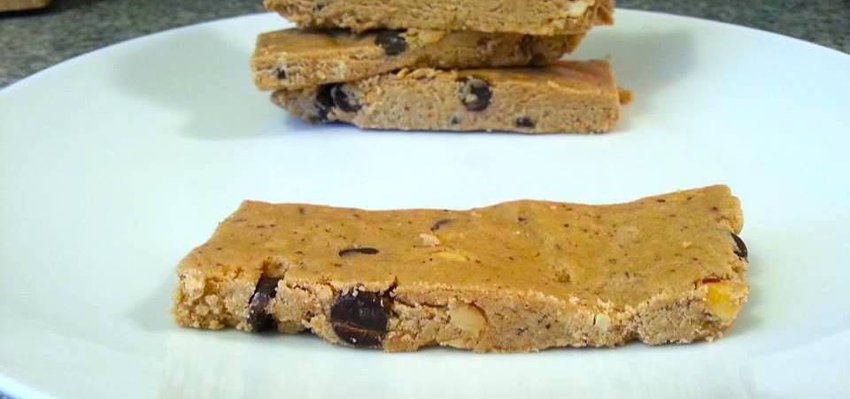
Peanut Butter Protein Bars

Chocolate Peanut Butter No-Bake Protein Bars (Vegan + Gluten-Free)
Ingredients
  • 3 cups gluten-free rolled oats, blended into a flour
  • 1 cup protein powder (I used a mild vanilla pea protein)
  • 1/4 tsp sea salt
  • 1/4 tsp cinnamon
  • 1 cup peanut butter (or use any nut butter of your choice)
  • 1 cup maple syrup (or use honey if you’d like)
  • 1/3 cup dairy-free chocolate chips or raw cacao nibs
Directions
  1. Stir together oat flour, protein powder, sea salt and cinnamon.
  2. Add in peanut butter and maple syrup, stirring well to combine. Mixture will be rather thick and dry. Add in a splash of almond milk if necessary.
  3. Stir in chocolate chips or raw cacao nibs, distributing evenly.
  4. Press the mixture into a wax paper-lined 9x13 pan, using a rolling pin on top to smooth if necessary.
  5. Place in freezer for about 10 minutes for bars to harden up. Remove and cut into 20 bars.
  6. To store: Wrap each bar individually in plastic wrap and store in the freezer in a container or air-tight bag.

New City Bike Map

We all know that runners and riders are close friends when it comes to the trails we use every day. When we can't enjoy the trails in the woods, we have to resort to trails or paths in town. I am very fortunate to live in a community that is bicycle friendly. That means more available trails or paths for runners as well. The City of Lawrence has just published a new map with the designated trails around town and it's a beauty.
Western States Lovin'

Here are some good links for Western States information. it would be a dream for me to run that race some day.

Gordy Ainsleigh Interview

Gordy Ainsleigh Video from Outside Magazine

Unbreakable Movie Link

More Protein Powers!


Everyone jump on the protein bandwagon, quick! I keep trying to find healthy ways to increase my protein intake. Here's a good source.

http://blog.fooducate.com/2014/06/09/the-right-way-to-think-about-protein/

  • 4 oz chicken breast – 25 grams
  • 4 oz hamburger – 20 grams
  • Glass of milk – 8 grams
  • Low fat yogurt  10 – 12 grams
  • Greek yogurt – 14-18 grams
  • 1 medium egg – 6 grams
  • 2 slices of whole grain bread – 6-10 grams
  • 2 tbsp of peanut butter – 8 grams
  • Handful of almonds – 7 grams
  • Mozzarella cheese string – 6 grams

Three Step Rx for Contentment

http://www.mindbodygreen.com/0-3973/Three-Step-Rx-for-Contentment.html

As prescribed by my doctor just a few months ago...Thank you, Dr. Park. 

1. Accept reality. Lower expectations.

Expectations can be some of the most powerful saboteurs of santosha. Expecting how a future experience will unfold is a recipe for disappointment: think Senior Prom or New Year’s Eve. Often our expectations of how an event will be and the reality of what is are on opposite sides of the spectrum. By setting expectations aside, we can actually be in the moment that is, not in some illusory notion of what should be. It’s a very cool and challenging practice and you just might notice yourself paying closer attention and seeing things you wouldn’t have noticed had you been looking for a fulfilled expectation. 

2. Think the good thought.

Obviously we do not have control over everything, in fact, we have very little control over what happens around us. It has become a bit of a cliché, but I have to say it anyway, no matter how out of control of a situation we may be, we do have control of our thoughts. You control your thoughts. Your thoughts do not control you. Notice where your mind goes. How often do you actually stop to acknowledge what you are thinking about? Pay attention to what you think about and if you are just thinking about something because you are in the habit of thinking about it. If your thoughts aren’t nourishing you and nurturing you, change your mind. Think the good thought. 

3. Be in the present moment.

When I am in the present moment, I am undoubtedly OK. Inevitably this moment will move into the next. No matter what this moment holds, it will change, it will ebb and it will flow. Everything is manageable in this present moment. It is all there really is, after all.

How to be Tough as Nails Mentally for Your 100 Miler

Great Article here.

The mental game is everything in a 100 mile ultra marathon. I've done enough 100's to know that it is usually the mental piece that leads to a DNF or a poor performance or alternately, that leads to success & other positive outcomes. Here are several proven (by me of course) strategies for maximizing your mental potential in the Queen of Ultras, the 100 mile race:

1. Just make it to the Next Aid Station: Forget about thinking of a 100 miler in terms of 100 miles. Instead think only about getting to the next aid station. Chances are that as bad as you feel at any given moment you will admit that you can make it to the next aid station. This rule is all about staying present where you are and not letting your fears take over. It's very hard for the mind to grasp 100 miles, or even having another 30 miles to go when you've just done 70 miles, but it's as simple as putting one foot in front of the other.

2. Remember it's #2 Kind of Fun: In other words, it's the kind of fun that you will look back on and say, "Gee that was so much fun! I'm so glad I finished that race!" Despite being miserable as hell for 80 miles. As odd as this sounds, it's true that you will most likely look back on your experience with a certain fondness and a new appreciation for what your body is capable of. This rule is courtesy Richard K. who kindly explained to me the difference between Fun #1 and Fun #2 (Fun #1 is fun at the time of the event like having a beer with your buddies, in case you were wondering).

3. Have a Bad Memory: Or rather a selective memory. It's important not to stress out about your perceived shortcomings, especially ones that are based on past experiences. Be gentle with yourself about past DNF's and poor performances. In fact, just forget about them as negative events and instead mine them for the gems that they are. My first 100 miler was a pretty big disaster at least according to my goals at the time but I learned that I needed to train with gear I'd use in the race and to fuel more mindfully to avoid the dreaded 100 mile nausea.

4. Less is More: Set yourself up to succeed mentally in your 100 miler by not overtraining and by tapering properly. If you feel good for longer physically during the race, you'll be ahead of the game. In training it means that it's better to do less mileage than too much. For example, if you overload your body with 10-20 more miles a week than your body can adapt to, you are back tracking your training. If you'd done exactly the milage your body can handle you would hit that sweet spot where you are getting maximum benefits for maximum mileage. Here's the trouble with trying too hard to hit that perfect spot: we don't have any way of knowing exactly where that sweet spot is each week or day other than listening to our body and our intuition. That is why it's better to err on the side of fewer miles than too many. Cross training can help close that gap between doing too few miles and your sweet spot-- without stressing your body out in the same way that only running mileage does. That being said, you can also under train which can be disastrous in a 100 mile race. You want to be prepared and have your body ready to handle the stress of the race. 

5. Exercise Your Mental Muscles: I'd right out say just do yoga everyday, but I admit there are other mental-physical practices that will get you similar results. For me, yoga is perfect for honing my mental muscles as it combines physically difficult poses with flowing breath which activates deep calmness during extreme physical strain. I enjoy hot vinyasa power yoga as the heat adds another element of stress to the body, further challenging my mental fortitude. This heat is great for runners who find regular yoga to not be challenging enough or who need heat training for an ultra.

6. Strategic Visualization: We visualize things all the time. How often do we visualize exactly what we want? Leading up to your race take a little time each day, preferably after a meditation or yoga practice when you are relaxed, to visualize your race going exactly as you want it to. Be very detailed in your vision. During your race return to the vision when you find yourself moving into fear or visualizing negative events. I can't stress enough that this is the most important key to 100 mile mental success. If you only do one of these mental strengtheners, do this one. Well, on second thought do the breathing one too.

7. Breathe: This one is deceptively simple and it's often overlooked. Feeling overwhelmed during a race? Breathe. Getting overly negative? Breathe. Climbing 5,000 feet in 5 miles? Breathe. Breath calms the body and connects us with the present. Being present is the key to mental strength. I highly recommend a regular breathing practice like yoga as it trains you how to use the breath through movement, something you can't learn during a 100 miler, you must practice beforehand.

8. Eat and Hydrate Regularly: The brain and your mental will power will fail if you do not hydrate and fuel properly. It's not as simple as it sounds of course: 100 mile nutrition is an art and it varies for each individual. That being said, you'd be best off trying to figure out what works for you as a well fed body will deliver incredible results.

9. Make Friends: Put away your Ipod and start talking to the runners around you. There's strength in numbers and strength in sharing our joys, pain and suffering. Not only will the miles fly by but you'll make new friends. At Zion 100 this past weekend, I made more friends than I've ever made in a race and not so coincidentally, I had more fun than I've ever had in a 100 miler. Three of us got about an hour and a 1500 foot extra climb off course and instead of suffering by ourselves we made a pact to run the rest of the race together and through that friendship we were stronger than any one of us was alone. It was a powerful lesson in the magic of friendship and camaraderie. I also make an effort to say something encouraging to every runner I cross paths with, it reminds me to smile and I hope it gives them a little boost.

10. Smile: Even if you have to peel your lips up your face, do it. Smiling works: it activates the brain to begin to think more positively and amazingly it helps you actually feel like smiling. Plus, you'll surely entertain the runners around you with your clown grin.